


Pallet delivery is a logistics solution that benefits a wide variety of businesses by transporting goods on secure pallets. It’s utilised by many businesses as an effective way of moving large, heavy and multiple items safely.
This method reduces handling, speeds up distribution and lowers the risk of product damage. In this helpful guide, we’ll explain how pallet delivery works, covering everything from load sizes to distribution networks, and highlighting the key benefits it offers to businesses.
What is a Pallet?
Starting with the basics, a pallet is a flat (and often square) standard structure onto which companies will place their goods. Numerous sizes are in circulation, but the 1200 x 1000 x 150mm is considered by most to be the standard UK size. The Euro standard is 1200 x 800 a 150mm.
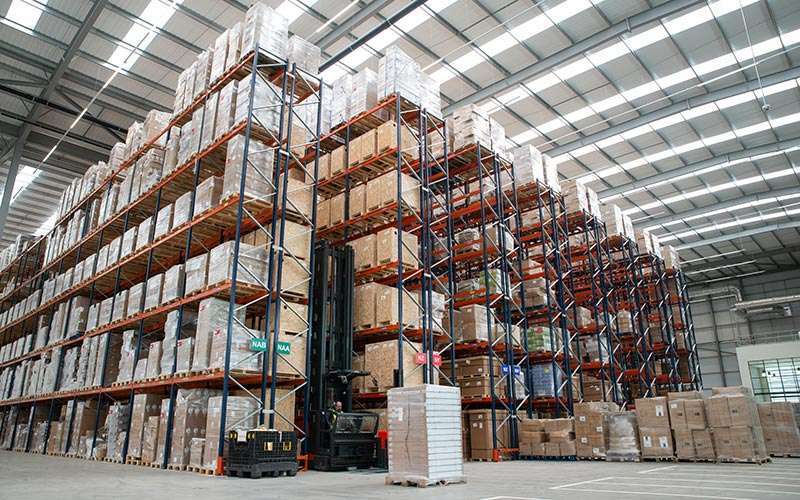
Around 55million timber pallet units are produced each year in the UK. This demonstrates how pallets are not just helpful but an absolute necessity for shipping. Pallets are often used in warehouses to make the movement and storage of individual items easier and more straightforward. They are also handy when transporting goods around the country, in Europe or around the world.
What is Pallet Delivery?
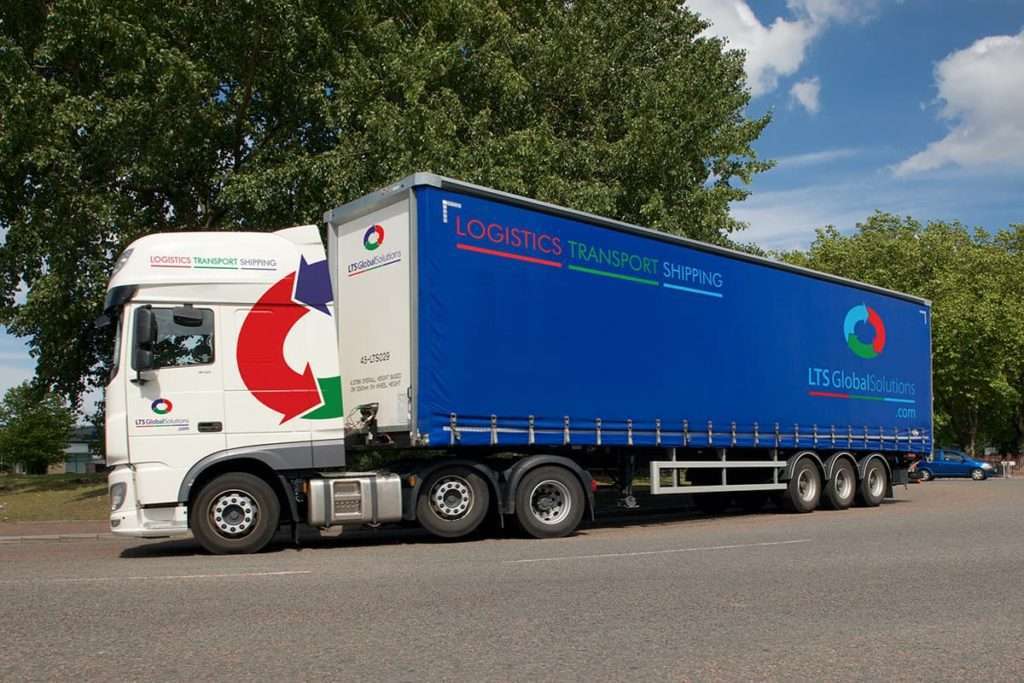
What is pallet delivery? In simple terms, the meaning of pallet delivery is exactly what it says on the tin. Specialist companies with lots of expertise will regularly collect and distribute pallets from business owners all around the country. At LTS, we offer a comprehensive range of logistics-related pallet services, from full and part load distribution through to palletised consignments.
Our team will always keep goods safe too, and we use secure transport tracking technology to ensure we know exactly where each vehicle is located in real time. As part of our service, we can provide same-day deliveries from a single pallet to a full load. Our team works hard to guarantee total customer satisfaction for each and every consignment, regardless of the challenges.
So, in a nutshell, pallet delivery is the process of moving goods from one place to another, on a pallet. Pallet shipping has become the most common form of distribution in the world.
How Does Pallet Delivery Work: A Step-by-Step Process
1. The process begins by contacting a pallet transport specialist and alerting them to a pallet collection and delivery that needs picking up. This can be done through telephone, email or via a specialist online portal. Depending on volume, some customers will have a daily scheduled collection.
2. The pallet shipping specialists will then collect the order at the time, place or date required by the client. Some firms will charge more for collections in the evening or at weekends. Therefore, it’s sensible to check rates before placing an order.
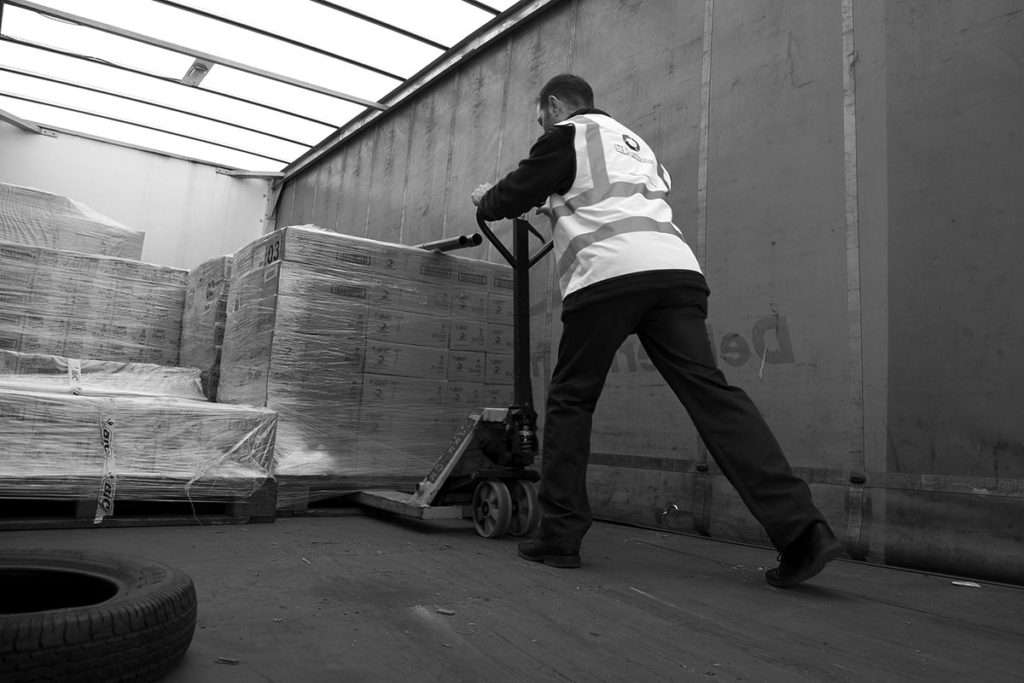
3. The pallets then go to a distribution warehouse, where in most instances, they are consolidated into routes for the delivery drivers. Warehouse staff will then use forklift trucks to load the pallets onto trucks carefully. Just like LTS, the distribution vehicles will then leave the warehouse on schedule to ensure all pallets reach their destinations on time.
4. Many pallet delivery firms will offer a tracking service to their clients. That often comes in the form of a web link people can click to check on the progress of their order.
5. Most specialists aim to make deliveries within 24 or 48 hours, depending on the requirements of their clients and the service level paid for. However, it can take longer to ship pallets abroad, especially if ocean, air and rail transport become part of the equation.
Shipping Large Items: Pallet Delivery & Load Size Explained
If you need to send heavy or unusually bulky items, pallet delivery is an excellent option. It’s ideal for awkward items such as car parts, furniture and heavy machinery. Pallets keep items of all sizes safe and secure.
It’s essential to know your load size to help you pick the right pallet and save on expenses. Load size options include a full pallet (up to 2.2m tall), a light pallet (same size as a full pallet but with a lower weight limit) and a quarter pallet (under 60cm high and 150kg, designed for smaller loads).
Sure! Using a pallet courier is simplicity itself, from the moment the business owner calls a specialist or books a pallet collection online. Below, there is a straightforward guide that explains everything in detail. This should help to dispel any myths and eliminate misconceptions.
How Much Does Pallet Delivery Cost?
The cost of pallet delivery depends on several factors, including the size of the pallet, the weight of the load and the delivery distance. A full pallet travelling overseas will cost more than a small quarter pallet being sent locally. Other factors that affect price include whether you choose standard, next-day or timed delivery and if the shipment is going abroad, customs and international freight charges will also apply.
Types of Pallet Delivery
There are two main types of pallets used for delivery, such as stringer and block pallets. Stringer pallets are best for heavy loads as they have long boards to help with weight distribution. Block pallets are designed for lighter loads and use solid wooden blocks at the base to provide a sturdy base during transport.
Pallet Distribution Networks
As most people will understand, it’s difficult for a company with one base to make 24-hour pallet deliveries all over the country. The firm would need hundreds of trucks and drivers. So, it’s not realistic for pallet delivery companies to make promises about fast deliveries without working with others. Relatively cheap pallet delivery is only possible with the network setup.
A pallet distribution network often comprises of many companies working closely together. They do this to provide efficient, cost-effective and comprehensive solutions to their customers. Each group, company or facility will have designated postcode areas to which they deliver and collect goods. If a customer from another part of the country needs to ship pallets to those locations, the orders will get passed to that particular team.
Transport Hubs Located In Strategic Points Around The Country
In most instances, pallet transport experts will open hubs in the main cities around the country to facilitate shipping. Let’s take a look at an example:
John owns a children’s toy company, and he needs to deliver a pallet of goods to a client in London. John’s firm is based in Liverpool, and so it’s a long distance to travel. He calls the pallet courier from Liverpool, and they come and collect the items before heading back to base. Delivering the pallet from that location is less than convenient. However, luckily, the carrier has a hub in Birmingham which is halfway to the destination. So, the experts send the pallet to Birmingham first. Delivery drivers from that location then take the item to its endpoint and keep to their schedule. You get the idea, right?
Hub and Spoke Distribution
In the industry, pallet shipping firms refer to that method as the Hub and Spoke system for obvious reasons. Time and time again, companies have proved that this strategy reduces the number of vehicles required and increases the average load per truck.
Results in More Reliable 24 hour Delivery
Pallet delivery services that use this system become far more reliable when offering 24-hour shipping. The method is also used by other transportation companies focusing on smaller items around the country.
In most instances, pallet distribution networks are run by a single brand. For example, here at LTS, we are part of the TPN network. The main hubs are operated by a central firm, while logistics companies like LTS both deliver to and collect from these hubs. If you plan to use a pallet distribution network long-term, take the time to research how individual systems work.

Pallet Distribution Networks and How They Operate
Do I Need to use a Pallet Distribution Network?
That is something individual business owners have to answer for themselves. If they understand all the ins and outs, the solution should become apparent. In most situations, pallet deliveries are particularly suitable for:
- 1-5 pallet consignments
- Heavy goods
- Regular quantities
- Fragile goods
- Anything that requires fast and economical shipping
However, lots of firms choose to send all manner of items on pallets these days. So, there are few limits when it comes to the type of products.
Even Entrepreneurs use a Pallet Courier
Most entrepreneurs and their associates opt for a pallet distribution network when they start to accept a considerable number of orders for the same product. Sending all those items separately would cost a small fortune. In that situation, pallet couriers often become the company’s best friend.
Benefits of Using Pallet Delivery
For businesses, pallet delivery provides several key advantages. It’s a secure, reliable and cost-effective way of shipping goods. Securing items on a pallet makes large loads easier to handle, reducing the risk of damage in transit. There’s also the benefit of faster delivery as pallets can be transported through a hub and spoke distribution network. Pallet delivery is also scalable, meaning businesses can send anything from a single pallet to full loads while still enjoying the same reliability and cost-efficiency. Pallets can also be tracked to provide businesses and consumers alike with peace of mind in being able to see the location of their pallets.
Preparing Goods for Pallet Delivery
The process of preparing items for pallet delivery is essential to keep them safe during transport. Goods should be stacked evenly on a pallet with heavier products at the bottom and lighter ones on top just like you would when you visit the supermarket. Shrink wrap, straps or banding to hold everything tightly in place, preventing movement in transit. For fragile or valuable goods, add extra protection such as corner boards, bubble wrap or pallet covers.
Package vs Pallet Delivery
When deciding between the two, consider the weight and volume of your goods, how quickly they need to arrive, and the overall shipping cost. For small, lightweight items, package delivery is often the simplest option. For bulkier or multiple items, pallet delivery provides greater protection, efficiency and value.
Why Choose LTS for Your Pallet Delivery
At LTS, we specialise in handling palletised freight and we are proud partners of The Pallet Network (TPN). The TPN makes palletised freight distribution quick and efficient as they have a network of 130 strategically located depots. With secure warehousing, advanced tracking technology, and a zero-tolerance approach to loss or damage, you can trust LTS to keep your consignments safe from start to finish. Contact us today to see how we can enhance your shipping and logistics. Give us a call on 0121 753 0080 or send us an email at info@ltsglobalsolutions.com.

0 Comments